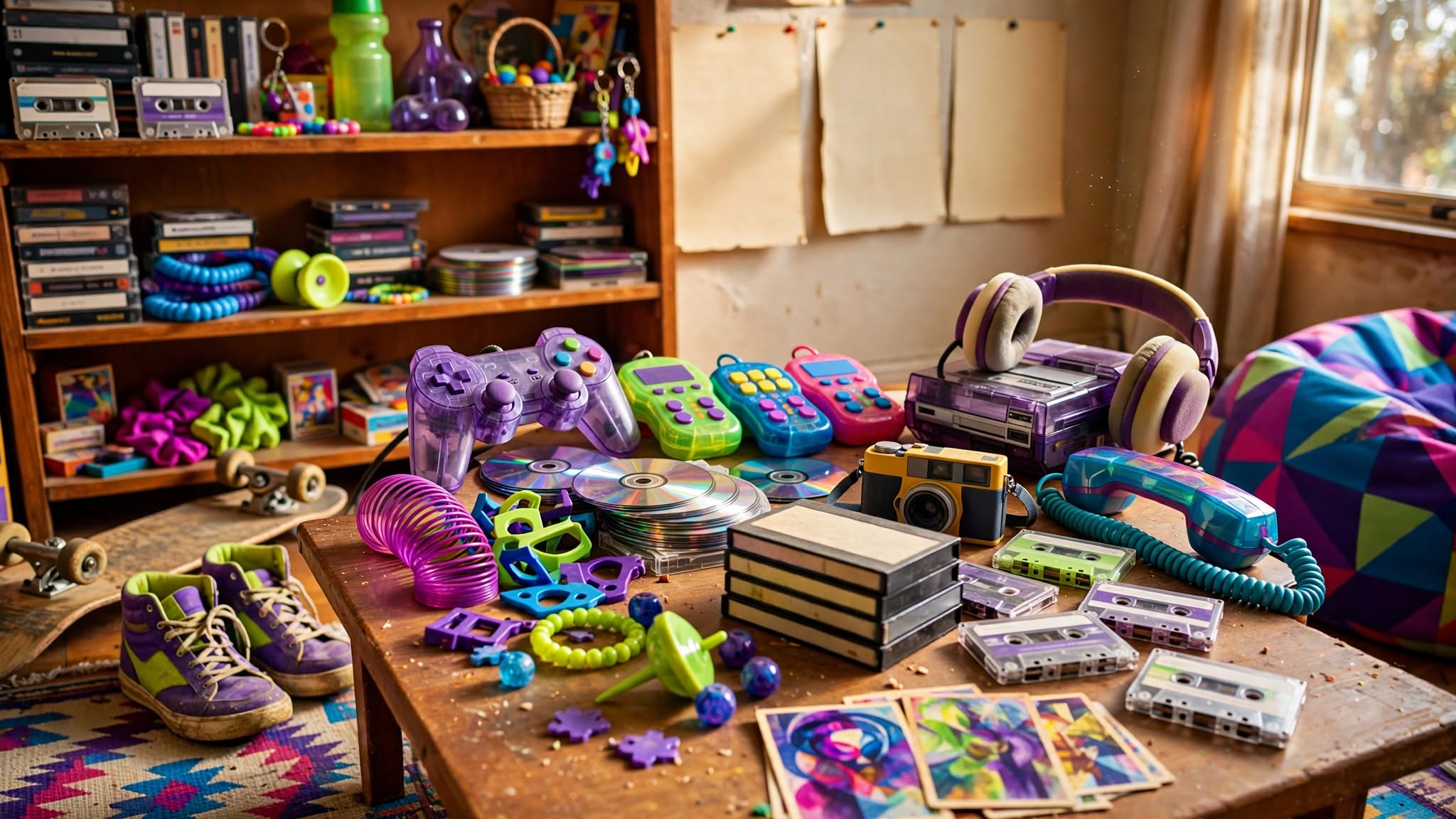
!90s Nostalgia Pop Culture Trivia: 10 Questions & Answers
90s Nostalgia Pop Culture Trivia: 10 Questions & Answers
90s Nostalgia Pop Culture Trivia Questions and Answers: The Ultimate Throwback Challenge
The 1990s were an unforgettable decade filled with iconic music, groundbreaking video games, memorable television shows, blockbuster movies, colorful fashion, and toys that defined an entire generation. From the excitement of Saturday morning cartoons to the sound of cassette tapes rewinding, the decade created countless cultural moments that people still celebrate today. Even those who grew up after the 90s are discovering its entertainment, style, and unique personality through streaming platforms, retro fashion, viral videos, and social media trends. This renewed fascination makes 90s nostalgia pop culture trivia questions and answers an entertaining way to bring generations together while giving content creators an exciting opportunity to build an audience.
Think about the things that made the decade special. Friends gathered around televisions to watch popular sitcoms, teenagers collected trading cards, gamers spent hours mastering classic console games, and music lovers carried portable cassette players everywhere. Movie theaters introduced unforgettable characters, animated shows became childhood favorites, and pop music transformed the entertainment industry. Even everyday objects, from disposable cameras to colorful inflatable furniture, became symbols of 90s life. Each of these memories can become the foundation of an engaging trivia challenge.
A successful 90s pop culture quiz should do more than ask viewers to recognize familiar names. The most entertaining questions encourage people to remember specific details, compare their memories with friends, and discover surprising facts about the decade. For example, a question might ask which television series featured a group of six friends living in New York, which Nintendo console introduced players to a new generation of 3D gaming, or which animated television series followed a group of children living in the fictional town of South Park. These questions create an immediate connection because viewers can picture the characters, music, or experiences associated with the answer.
Creators can make their quizzes even more interesting by organizing questions into recognizable categories. A television round can explore sitcoms and animated classics, while a music round can challenge viewers to identify famous artists, albums, and hit songs. Movie questions can revisit popular comedies, action adventures, and science-fiction favorites. Gaming challenges can cover Nintendo, Sega, arcade classics, and memorable video game characters. Fashion and everyday-life questions can bring back references to oversized clothing, colorful accessories, cassette players, VHS rentals, and other objects that made the decade distinctive.
The best strategy is to mix easy, medium, and difficult questions. Begin with a familiar reference that most viewers can recognize, then gradually introduce details that challenge even dedicated 90s fans. Give viewers enough time to think before revealing the correct answer, and include a short explanation that adds something interesting rather than simply repeating the answer. A countdown, clear captions, energetic narration, and a satisfying answer reveal can turn a simple collection of questions into an interactive short-form entertainment experience.
For creators building YouTube Shorts, Instagram Reels, Facebook videos, or Pinterest content, nostalgia is particularly useful because it naturally encourages participation. Viewers often comment with their favorite childhood shows, argue about which console was better, share memories of particular songs, or tag friends who remember the same cultural moments. Questions such as “How many of these 90s classics can you recognize?” or “Only true 90s kids will get all 10 correct!” give audiences a reason to watch until the final answer. A recurring series can also encourage viewers to return for new challenges instead of treating every upload as an unrelated video.
Producing these videos consistently, however, can become time-consuming. Researching questions, checking answers, recording narration, adding captions, arranging options, and editing each video individually can slow down a creator who wants to publish regularly. This is where QuizViral AI can make the production process more efficient. Creators can prepare their trivia questions in a structured CSV spreadsheet containing the question, four answer options, the correct answer, and an explanation. By importing that spreadsheet, they can use automated bulk video generation to turn multiple questions into a collection of quiz videos. Automated voiceovers and reusable video templates can further reduce repetitive production work.
The most effective workflow still begins with good research. Check release years, character names, television details, music facts, and gaming history before adding questions to your spreadsheet. Avoid confusing similar franchises or presenting a popular memory as a verified fact. Use original visuals, properly licensed background footage, and suitable music rather than assuming that every nostalgic movie clip or hit song is free to reuse. Automation can help produce content faster, but accuracy, originality, and thoughtful presentation are what make viewers trust a channel.
Whether you grew up watching 90s television, playing classic video games, collecting trading cards, or discovering the decade through modern entertainment, this collection of trivia offers a chance to revisit the moments that made the era special. Get ready to test your memory, challenge your friends, and discover how much you really know about one of pop culture's most memorable decades. The ultimate retro challenge begins with one question: are you a casual fan of the 90s, or a true nostalgia expert?
90s Nostalgia Pop Culture Trivia: Cartoons, Music, Movies, and Childhood Memories
The secret to creating an engaging 90s nostalgia quiz is understanding that people are not simply remembering entertainment; they are reconnecting with a particular period of their lives. A familiar cartoon character, the opening notes of a popular song, or the name of an old video game can instantly bring back memories of childhood afternoons, weekend television, school friends, and family movie nights. These emotional connections make 90s pop culture especially suitable for short-form trivia videos because viewers have a natural reason to participate, share their memories, and challenge other people.
Instead of creating a random collection of questions, organize your content around four major nostalgia categories: cartoons, music, movies, and everyday childhood experiences. Give each category its own identity, visual style, and level of difficulty. This approach makes it easier to build a recognizable series while keeping individual episodes fresh.
1. Bring Back the Cartoon Characters Everyone Remembers
Cartoons are among the strongest nostalgia triggers because many viewers associate them with specific routines. Think about watching animated shows before school, rushing home to catch an afternoon episode, or discussing favorite characters with friends. Popular 90s animated series included Rugrats, Dexter's Laboratory, The Powerpuff Girls, Pokémon, Batman: The Animated Series, and South Park.
Make cartoon questions more interesting by focusing on recognizable details rather than asking only for the name of a show. You could ask viewers to identify the fictional town where a series takes place, recognize a character's unusual personality, or remember the name of a character's family member. For example, a question about the three Powerpuff Girls can test whether viewers remember their individual names: Blossom, Bubbles, and Buttercup.
A useful recurring content format is Cartoon Time Machine: Name That 90s Show. Each episode contains five cartoon questions, beginning with an easy character question and ending with a difficult detail from a popular series. Use original cartoon-inspired backgrounds, bright colors, and clear character descriptions. Avoid copying copyrighted character artwork unless you have permission to use it.
2. Turn 90s Music Memories Into Shareable Challenges
Music creates powerful nostalgia because people often associate particular songs with their teenage years, friendships, celebrations, and important personal memories. The 1990s featured major developments in pop, hip-hop, R&B, alternative rock, and dance music. Artists such as Britney Spears, the Spice Girls, Tupac Shakur, Mariah Carey, Backstreet Boys, and Nirvana became important parts of the decade's musical landscape.
Build questions around album titles, musical groups, famous collaborations, genres, and chart milestones. A music challenge could ask viewers to identify which group released a particular album or which artist was associated with a well-known 90s hit. You can also create a decade timeline challenge that asks viewers to match an artist or album with its release year.
For example, the Spice Girls released their debut album Spice in 1996. That concrete detail can become a question that tests both music knowledge and memory of the decade. When creating music videos, use properly licensed audio or original background music. A recognizable commercial recording may trigger copyright claims, so nostalgia should never be treated as automatic permission to reuse copyrighted songs.
3. Revisit the Movies That Defined a Generation
Movies offer another excellent source of trivia because memorable scenes, characters, costumes, and fictional worlds remain recognizable decades later. The 1990s produced films across comedy, animation, science fiction, adventure, and family entertainment. Examples include Toy Story (1995), Jurassic Park (1993), Home Alone (1990), The Lion King (1994), Clueless (1995), and Titanic (1997).
Instead of asking only for movie titles, use questions about specific story details. Ask which character was left home alone, which dinosaur species became one of Jurassic Park's most recognizable attractions, or which animated film featured Simba. These questions help viewers recall the actual experience of watching a movie rather than simply recognizing a poster.
Try a recurring format called One Scene, One Memory. Describe a memorable scene without revealing the movie title, then give viewers four possible answers. For example, describe a young boy defending his home with creative household traps during the holiday season. Viewers must identify Home Alone. This format can work particularly well with original illustrations and carefully written clues instead of unauthorized movie footage.
4. Make Childhood Objects Part of the Trivia Experience
Some of the most shareable nostalgia questions are not about celebrities or blockbuster films. They are about everyday objects people used before modern smartphones and streaming services became part of daily life. Portable cassette players, VHS rentals, disposable cameras, Tamagotchis, colorful inflatable furniture, trading cards, and handheld electronic games can all inspire questions.
Consider a question asking viewers what a Tamagotchi was designed to simulate. People who remember carrying one around may immediately recognize the answer, while younger viewers can discover an interesting piece of technology history. Other questions could explore how people rented movies before streaming, what they used to rewind VHS tapes, or why collecting Pokémon cards became such a popular childhood hobby.
For a specific visual strategy, create a recurring challenge called What Did We Use Before Smartphones? Show an original photograph-style image of a disposable camera, cassette player, or transparent landline telephone. Ask viewers to identify the object or explain what it was used for. Keep the image free of labels so that the audience has to rely on memory rather than reading the answer.
5. Build a Quiz That Encourages Comments and Shares
A good nostalgia quiz should make viewers feel that they are participating in a shared memory rather than taking an examination. Use friendly challenges such as “Did you grow up with these cartoons?” or “Send this to someone who remembers renting VHS tapes.” Encourage viewers to share their score and mention the show, song, or movie they remember most.
Mix difficulty levels carefully. An episode containing ten extremely difficult questions may discourage casual viewers, while ten obvious questions may not challenge dedicated fans. A useful structure is to begin with three easy questions, introduce four medium questions, and finish with three difficult ones. This creates a gradual challenge and gives viewers a reason to continue watching.
Another practical technique is to rotate categories rather than publishing the same type of nostalgia every day. For example, a weekly schedule could feature cartoons on Monday, music on Tuesday, movies on Wednesday, childhood technology on Thursday, and a mixed decade challenge on Friday. This gives your audience variety while keeping your channel's identity consistent.
6. Use QuizViral AI to Turn a Question Bank Into Multiple Videos
Producing a large nostalgia series manually can become repetitive. QuizViral AI can help creators organize and generate multiple quiz videos through CSV bulk imports, automated voiceovers, and reusable video templates. The key is to prepare a well-researched question bank before starting production.
Here is a concrete workflow: prepare a spreadsheet containing 50 questions divided into five categories of 10—cartoons, music, movies, childhood technology, and mixed pop culture. Include columns for the question, four options, correct answer, explanation, and category. Import the CSV into QuizViral AI and use the available bulk-generation workflow to produce a batch of videos. You can then review the generated narration, captions, answer timing, and visual presentation before publishing.
For example, all ten cartoon questions can use a colorful retro-inspired visual template, while the music questions can use an original 90s-inspired geometric background. A movie round can use cinematic textures and dramatic lighting, and a childhood technology round can feature original still-life images of cassette players, VHS tapes, and handheld toys. This gives each category a recognizable look without requiring you to design every video from the beginning.
Use natural-sounding AI voiceovers and keep the question readable long enough for viewers to consider all four options. A practical short-video structure is to introduce the question, display the answer choices, provide a short countdown, reveal the correct answer, and add one interesting explanation. Review every generated video: automated production does not guarantee that a historical fact, answer, pronunciation, or caption is correct.
10 Sample 90s Nostalgia Pop Culture Trivia Questions and Answers
Use the following questions as a starting point for a retro 90s quiz. They cover animated television, music, movies, gaming, and childhood memories. Each question includes four possible answers and a short explanation that can also be used in a quiz-video answer reveal.
Question 1: What was the name of the fictional town where the animated series South Park takes place?
- A. Springfield
- B. South Park
- C. Quahog
- D. Bedrock
Correct Answer: B. South Park Explanation: South Park is set in the fictional Colorado town of the same name. The animated series premiered in 1997 and became known for its satirical humor.
Question 2: Which three girls were the original members of the Spice Girls?
- A. Blossom, Bubbles, and Buttercup
- B. Baby, Ginger, and Sporty
- C. Raven, Star, and Angel
- D. Ruby, Daisy, and Lily
Correct Answer: B. Baby, Ginger, and Sporty Explanation: Baby Spice, Ginger Spice, and Sporty Spice were three members of the British pop group, alongside Scary Spice and Posh Spice. The group became an international pop phenomenon during the 1990s.
Question 3: In which year was the original Toy Story movie released?
- A. 1992
- B. 1994
- C. 1995
- D. 1998
Correct Answer: C. 1995 Explanation: Toy Story was released in 1995. It was Pixar's first feature-length film and became a landmark in computer-animated filmmaking.
Question 4: What kind of animal was Pikachu in the original Pokémon franchise?
- A. Fire Pokémon
- B. Water Pokémon
- C. Electric Pokémon
- D. Grass Pokémon
Correct Answer: C. Electric Pokémon Explanation: Pikachu is an Electric-type Pokémon known for generating electricity through the electric sacs in its cheeks. The character became one of the franchise's most recognizable symbols.
Question 5: Which 1993 movie featured a theme park populated by genetically recreated dinosaurs?
- A. Jumanji
- B. Jurassic Park
- C. The Lost World
- D. Godzilla
Correct Answer: B. Jurassic Park Explanation: Directed by Steven Spielberg, Jurassic Park introduced audiences to a fictional dinosaur theme park created through genetic engineering. Its groundbreaking visual effects helped make it one of the decade's defining films.
Question 6: Which handheld virtual pet became a popular 90s toy that required regular feeding and attention?
- A. Furby
- B. Tamagotchi
- C. Game Boy
- D. Pogs
Correct Answer: B. Tamagotchi Explanation: Tamagotchi was a handheld digital pet that users had to feed, clean, and care for. Its popularity made it a memorable part of 1990s toy culture.
Question 7: Which 1990s sitcom followed six friends living in New York City?
- A. Seinfeld
- B. Full House
- C. Friends
- D. Home Improvement
Correct Answer: C. Friends Explanation: Friends premiered in 1994 and followed Rachel, Monica, Phoebe, Joey, Chandler, and Ross as they navigated relationships, work, and everyday life in New York City.
Question 8: Which company released the Nintendo 64 gaming console in 1996?
- A. Sega
- B. Sony
- C. Nintendo
- D. Atari
Correct Answer: C. Nintendo Explanation: Nintendo released the Nintendo 64 in 1996. The console became famous for bringing 3D gaming experiences into many homes and for games such as Super Mario 64.
Question 9: Which 1994 animated Disney movie tells the story of Simba?
- A. Aladdin
- B. The Lion King
- C. Mulan
- D. Hercules
Correct Answer: B. The Lion King Explanation: The Lion King follows Simba, a young lion who must confront his past and accept his responsibilities. Released in 1994, the film became one of Disney's most recognizable animated classics.
Question 10: What was the main purpose of a VHS rewinder?
- A. To record television programs
- B. To rewind videotapes to the beginning
- C. To clean cassette tapes
- D. To convert videos into DVDs
Correct Answer: B. To rewind videotapes to the beginning Explanation: A VHS rewinder returned a videotape to the beginning without using the video player's rewind function. It was a familiar accessory for households that regularly rented or watched VHS movies.
Final Tips for Creating a Memorable 90s Trivia Series
The strongest 90s nostalgia content combines recognizable memories with surprising details. Use cartoon characters to attract animation fans, music questions to connect with listeners, movie challenges to engage film lovers, and childhood-object questions to bring back everyday experiences. Give each video a clear hook, keep the options easy to read, and make the answer explanation genuinely interesting.
Most importantly, treat your question bank as an ongoing content asset. A carefully researched collection of 50 questions can become a foundation for multiple themed episodes, longer quizzes, and future nostalgia challenges. With QuizViral AI handling repetitive bulk-generation tasks, you can spend more time researching interesting facts, checking answers, developing original visuals, and understanding which memories encourage viewers to comment and share. The goal is not simply to remind people that the 90s existed; it is to make them feel excited about remembering the decade together.
Leveraging SaaS Automation for Modern Content Brands
The growing popularity of faceless YouTube channels has changed how creators approach entertainment content. A channel no longer needs a presenter speaking directly to a camera to build an audience. Well-designed quizzes, clear narration, engaging visuals, and a recognizable format can create an entertaining experience without revealing the creator's identity. This makes the faceless format particularly suitable for 90s nostalgia pop culture trivia questions and answers, where the main attraction is the memories, questions, and discoveries rather than the person presenting them.
Imagine a channel called 90s Memory Lane. Instead of filming a host, each video opens with a colorful retro-inspired background, followed by a question about a classic cartoon, movie, music group, or childhood toy. Viewers see four possible answers, get a few seconds to make their choice, and then receive the correct answer with an interesting explanation. A consistent format makes the channel recognizable while allowing the creator to explore hundreds of nostalgia topics.
Producing these videos manually can become a significant workload. Each episode requires a question, answer options, narration, captions, visual backgrounds, timing, and editing. SaaS automation tools such as QuizViral AI can reduce repetitive production tasks through CSV imports, automated voiceovers, and reusable video templates. Creators can prepare a spreadsheet containing dozens of questions and use the bulk-generation workflow to turn that information into multiple quiz videos.
For example, a creator could prepare a CSV containing 100 researched questions divided into ten categories: 90s cartoons, sitcoms, blockbuster movies, pop music, hip-hop, video games, toys, fashion, childhood technology, and mixed pop culture. Each row could include the question, four answer options, the correct answer, and a short explanation. After importing the spreadsheet, the creator can generate a batch of videos using a consistent presentation style. The time saved can be invested in checking facts, improving questions, and reviewing the final videos.
Background loops can also help establish a visual identity. QuizViral AI offers background options such as Minecraft parkour, space, and nature footage. These can provide movement behind the quiz content, although the visual choice should match the subject. A space background might suit a question about science-fiction movies, while a nature background could provide a calmer setting for a general knowledge round. Minecraft parkour can create a fast-moving visual contrast, but it may feel disconnected from retro pop culture unless the channel deliberately uses it as a recurring visual style. Make sure any background footage is authorized for your intended use.
For a more distinctive nostalgia brand, consider creating original visual assets inspired by the decade: geometric patterns, cassette tapes, VHS textures, colorful arcade-style graphics, disposable cameras, and retro room photography. These elements can make the content feel connected to the 1990s without requiring unauthorized movie clips or copyrighted cartoon images.
Automated voiceovers make it possible to produce narration without recording every question yourself. Choose a clear, energetic voice that gives viewers enough time to read the options. Review pronunciation of names, song titles, television shows, and movie titles before publication. Captions should match the narration, and the correct answer should appear at the appropriate moment. Automation can speed up production, but it does not replace editorial judgment. Every question still needs to be accurate, understandable, and genuinely entertaining.
The larger opportunity is to treat the channel as a content brand rather than a collection of unrelated uploads. Use recurring series such as cartoon challenges, movie memory tests, and childhood technology quizzes. Give each series a recognizable visual treatment and consistent opening style. This creates a repeatable production system while allowing the subject matter to change from episode to episode.
Unlocking Multi-Stream Revenue on YouTube
A nostalgia trivia channel can eventually develop several revenue streams, but monetization should be treated as a long-term business objective rather than an immediate result of publishing videos. The first priority is to build a recognizable channel, attract viewers who genuinely enjoy the subject, and create original content that encourages people to return.
1. Understand the YouTube Partner Program
One established route to full YouTube Partner Program advertising revenue sharing requires 1,000 subscribers and 10 million valid public Shorts views within 90 days. Meeting these numbers does not automatically guarantee approval. YouTube also reviews the channel's content, originality, policy compliance, and other eligibility requirements. Alternative eligibility routes and certain fan-funding features may have different thresholds in eligible countries, so creators should check YouTube's current official Partner Program requirements before planning around a particular target.
For a 90s nostalgia channel, reaching this level requires more than uploading a large number of automated quizzes. Viewers need a reason to watch, finish, comment, and share. A question about the name of a popular 90s television character might attract casual viewers, while a difficult question about a classic video game can encourage dedicated fans to participate. Test different hooks, question lengths, and category combinations to understand what your audience enjoys.
2. Build an Email List Around Nostalgia Fans
An email list gives creators a direct way to communicate with their audience beyond the reach of social media recommendations. You could offer a free downloadable resource called The 90s Nostalgia Challenge Pack, containing 20 original questions about cartoons, movies, music, and childhood memories. Viewers who want the printable challenge can sign up through a clearly explained landing page.
Once people subscribe, send occasional updates featuring new trivia collections, upcoming challenges, and interesting facts about 90s entertainment. Keep the emails useful rather than sending constant promotional messages. Make subscriptions voluntary, explain what subscribers will receive, and provide a clear way to unsubscribe.
3. Create Custom Nostalgia Merchandise
Merchandise can turn a successful content identity into a recognizable brand. A channel focused on the 1990s could develop original designs featuring general retro themes such as cassette tapes, arcade-inspired graphics, VHS collections, geometric patterns, and playful phrases about childhood memories.
Possible products include:
- Retro-inspired T-shirts featuring original 90s-themed artwork.
- Mugs decorated with cassette-player or arcade-inspired illustrations.
- Stickers featuring original nostalgic designs.
- Posters celebrating general 1990s music, gaming, and movie culture.
- Printable scorecards for family and friends' nostalgia quiz nights.
Print-on-demand services can help creators sell merchandise without purchasing large quantities of inventory in advance. However, intellectual property matters. Do not use protected cartoon characters, movie artwork, celebrity photographs, official logos, or commercial music designs without appropriate permission. Build your own recognizable visual identity instead of presenting unofficial merchandise as licensed products.
4. Sell Digital Downloads and Trivia Collections
Digital products are particularly relevant to a quiz channel because the audience already enjoys testing its knowledge. You could create an original product called The Ultimate 90s Nostalgia Trivia Collection, designed for people who want to organize their own retro quiz nights.
The collection could include:
- 100 original questions covering television, cartoons, movies, music, and gaming.
- Separate beginner, intermediate, and expert challenge rounds.
- Answer sheets with short explanations and verified facts.
- A printable scorecard for teams and family competitions.
- A special childhood memories round featuring toys and everyday technology.
You could sell the collection as a downloadable PDF or printable quiz pack through an appropriate digital storefront. Another option is to offer a smaller free sample and sell a more comprehensive edition. Make sure the questions, explanations, graphics, and layouts are original or properly licensed. A useful digital product should offer more than a copy of the questions already available in free videos.
5. Explore Sponsorships and Relevant Partnerships
As the channel grows, potential sponsors might include trivia applications, board-game companies, entertainment publications, retro gaming retailers, and businesses selling licensed collectibles. A sponsor could support a special 90s music challenge or a weekly retro movie trivia series.
Before approaching brands, prepare a simple media kit showing your channel's subject, audience demographics, average views, engagement, and available sponsorship formats. Be transparent about paid partnerships and recommend products that genuinely fit the audience. A smaller but engaged community of nostalgia enthusiasts may be more valuable to a relevant sponsor than a large audience with little interest in the advertised product.
The strongest monetization strategy combines several sources of income without allowing promotions to overwhelm the entertainment. Advertising can provide platform revenue, email subscribers create a direct audience relationship, merchandise gives fans something tangible, and digital trivia products turn the channel's expertise into something people can use outside YouTube.
FAQ for Video Creators
1. Can a faceless 90s nostalgia trivia channel get monetized on YouTube?
Yes, a faceless channel can qualify for YouTube monetization if it meets the applicable eligibility requirements and follows the platform's monetization policies. Showing your face is not a requirement for building an original entertainment channel. However, simply generating large quantities of repetitive videos does not guarantee approval. Your questions should be researched, your explanations should add value, and your videos should offer meaningful variation. Avoid publishing nearly identical videos with only a few words changed or relying entirely on reused clips from television shows, movies, and music videos. Use original narration, thoughtful editing, appropriate visuals, and distinctive quiz formats. YouTube reviews the channel as a whole, so focus on making the content genuinely useful and entertaining rather than treating automated production as a shortcut to approval.
2. How long does it take to grow a 90s nostalgia trivia channel?
There is no guaranteed timeline. Some videos may attract attention quickly, while others may take weeks or months to find their audience. Growth depends on factors such as question quality, audience interest, presentation, competition, viewer retention, and how consistently you publish. Start with a manageable schedule, such as one carefully reviewed Short per day, and test different categories. Compare cartoon questions with music challenges, movie trivia, and childhood technology quizzes. Study which videos receive stronger retention, comments, shares, and returning viewers. If a particular format performs well, develop more episodes around that subject without copying the exact same questions. Use the results to improve your content strategy instead of assuming that posting more videos will automatically produce faster growth.
3. How can I make automated nostalgia quiz videos original and avoid copyright problems?
Originality starts with the research and presentation. Write your own questions and explanations, develop distinctive video templates, use original or properly licensed background visuals, and choose music that you have permission to use. Avoid downloading cartoon scenes, movie clips, celebrity photographs, commercial recordings, or official promotional artwork simply because they are easy to find online. Copyright exceptions such as fair use are fact-specific and do not guarantee that a video will avoid claims or restrictions. You should also check the accuracy of every question, especially release years, character details, and music facts. QuizViral AI can help automate bulk generation through CSV imports and voiceovers, but the creator remains responsible for the material being published. A strong nostalgia channel should have its own voice, original explanations, and a recognizable visual identity.
The opportunity in 90s nostalgia pop culture is bigger than simply asking viewers to remember old television shows or identify famous songs. It is about building a community around shared memories and giving people a reason to return for the next challenge. Start with a well-researched collection of questions, create recognizable themed series, and use QuizViral AI to make repetitive production tasks more manageable. Then build long-term value through an email audience, original merchandise, digital trivia collections, and relevant partnerships. Most importantly, keep the memories authentic, the facts accurate, and the content original. That combination can turn a simple retro quiz idea into a recognizable entertainment brand.