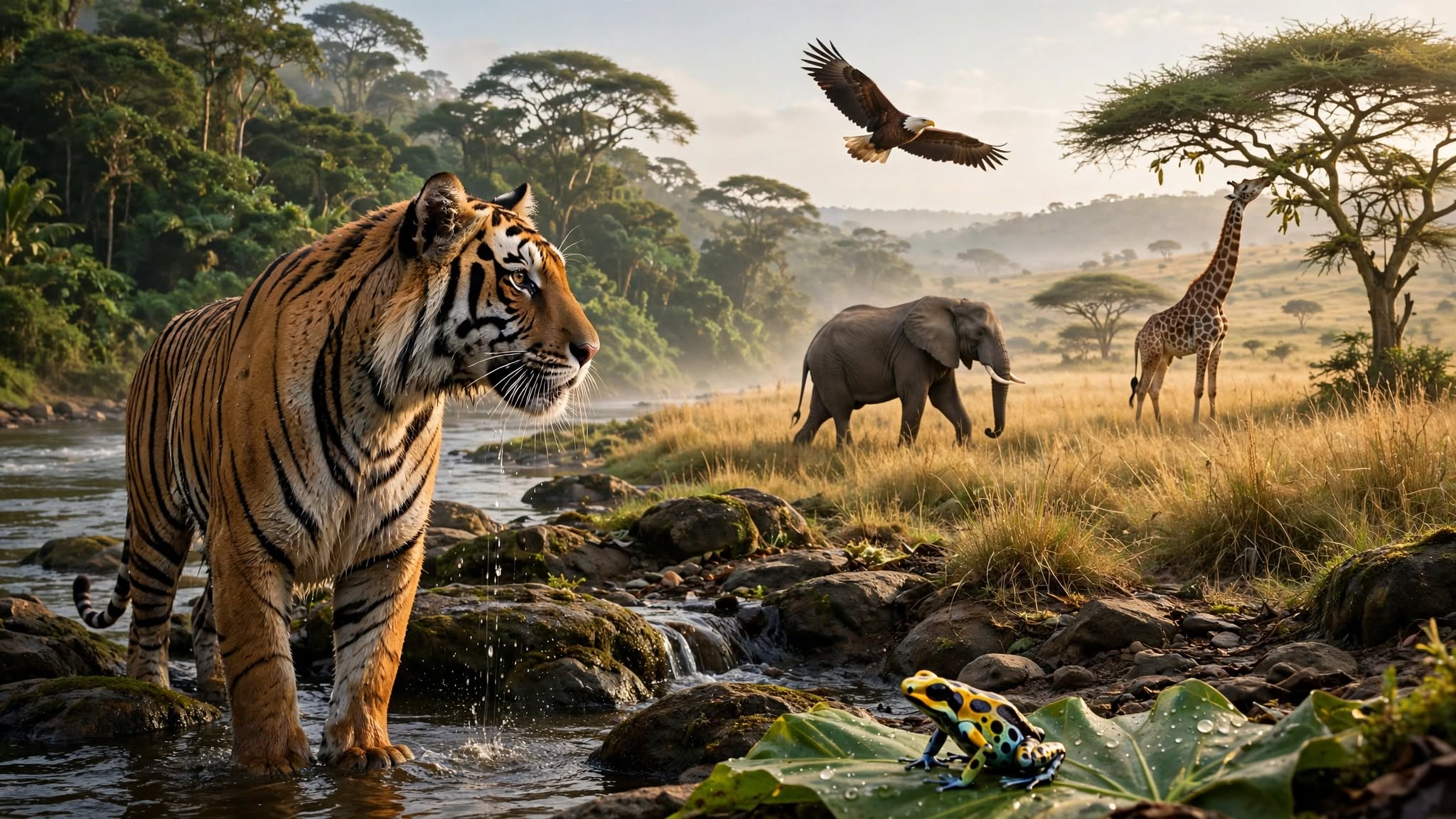
!Animal Kingdom Extreme Facts Quiz: 10 Wild Surprises
Animal Kingdom Extreme Facts Quiz: Test Your Knowledge of Nature's Wildest Secrets
The natural world is full of extraordinary creatures, but some of its most fascinating stories are hidden in the unusual ways animals survive. From insects that produce chemical sprays to amphibians that tolerate freezing temperatures, the animal kingdom is packed with adaptations that can seem almost unbelievable. An animal kingdom extreme facts quiz turns these discoveries into an entertaining way to explore wildlife, challenge your knowledge, and learn the science behind nature's strangest abilities.
Animal trivia is especially engaging because it combines curiosity with discovery. A question about an octopus releasing ink, a lizard using an unusual defense, or a tiny crustacean producing a powerful underwater shockwave can make viewers pause and think. The best questions do more than reveal a surprising answer: they explain how an adaptation works and why it helps an animal survive.
A well-rounded nature quiz can explore animal intelligence, unusual anatomy, defensive strategies, hunting techniques, camouflage, communication, and survival in extreme environments. You might investigate how certain creatures avoid predators, how marine animals use specialized body structures, or how species cope with cold, heat, and limited food. These subjects provide a wide range of possibilities for wildlife trivia and educational entertainment.
Accuracy is essential when presenting extreme animal facts. A record for running speed should not be confused with diving or flying speed, and a behavior found in one species should not be attributed to an entire animal group. Some records are disputed or depend on how scientists measure them. A good quiz makes these distinctions clear and gives viewers a short explanation after every answer.
Creators can organize their content into recognizable themes such as Ocean Mysteries, Deadly Animal Defenses, Record-Breaking Wildlife, and Strange but True Animal Facts. These recurring themes make it easier to plan future episodes while giving viewers a reason to return. A short video can begin with a curiosity-driven question, display four possible answers, provide a brief countdown, and then reveal the correct answer with a concise scientific explanation.
For example, a question about how many hearts an octopus has can introduce its unusual circulatory system. Rather than stopping at the answer, a follow-up explanation can describe how its three hearts work and why the detail is so memorable. This approach turns a simple trivia moment into a small learning experience.
QuizViral AI can help creators organize researched questions in CSV spreadsheets and use bulk video generation to turn multiple entries into video drafts. A spreadsheet can include the question, four options, correct answer, and explanation. Reusable templates and automated voiceovers can reduce repetitive production work, leaving more time for research, narration review, and visual selection. Human fact-checking remains essential: automation should help produce videos, not decide whether a scientific claim is true.
Whether you enjoy testing your wildlife knowledge or want to create educational short-form content, the animal kingdom offers endless opportunities for discovery. The following questions explore unusual animal defenses, strange habits, and remarkable adaptations that demonstrate just how inventive nature can be.
Animal Kingdom Extreme Facts Quiz: Bizarre Defense Mechanisms and Unbelievable Wildlife Secrets
The animal kingdom is full of survival strategies that seem almost impossible. Some creatures release chemical sprays, others pretend to be dead, and a few can deliberately sacrifice parts of their own bodies to escape predators. These unusual behaviors make excellent quiz material because they combine surprising science with the kind of unexpected discoveries that make people stop scrolling.
The Bizarre Chemical Weapons of the Animal World
Some animals defend themselves using chemicals that discourage or confuse predators. The bombardier beetle is a remarkable example. When threatened, it can release a hot chemical spray from specialized glands in its abdomen. The beetle produces this defensive reaction through a controlled chemical process, directing the spray toward an attacker. It is an extraordinary example of how a relatively small insect can defend itself without relying on size or strength.
This makes an excellent quiz subject because the question creates an immediate visual mystery: how can such a tiny insect produce a defensive chemical spray? Creators can show a close-up illustration of the beetle, offer four possible defense mechanisms, and reveal the answer with a short scientific explanation.
Animals That Pretend to Be Dead
Playing dead is another fascinating survival strategy. The Virginia opossum is famous for this behavior, commonly called thanatosis. When seriously threatened, it may become unresponsive, lie still, and appear lifeless. This reaction can discourage some predators that prefer living prey or lose interest in an apparently dead animal.
The behavior is particularly useful for short-form content because it creates an unexpected contrast between appearance and reality. A video could begin with the question, “Which animal can pretend to be dead when threatened?” Viewers might guess a snake, fox, rabbit, or opossum. The answer reveal provides a satisfying moment while introducing a real biological survival behavior.
The Horned Lizard's Unusual Defense
One of the most surprising defensive adaptations belongs to certain horned lizards. Some species can squirt blood from small vessels around their eyes when threatened by predators. This unusual behavior is particularly associated with defense against certain canine predators. The blood contains chemical compounds that can make it unpleasant to some attackers.
It is important to explain this fact accurately. Not every horned lizard species uses this behavior, and the animal does not simply spray blood whenever it encounters danger. The response is a specialized defense used under particular circumstances. That distinction makes the question more educational and prevents an exaggerated wildlife fact from becoming misinformation.
Sea Cucumbers That Eject Their Internal Organs
Sea cucumbers have one of the strangest defense mechanisms in the ocean. Certain species can expel internal organs or specialized sticky structures through their body openings when threatened. This behavior is known as evisceration. The expelled material can distract, entangle, or discourage predators while the sea cucumber attempts to escape. Some species can regenerate the lost structures over time.
This is a particularly effective topic for a wildlife quiz because the answer is genuinely unexpected. A question about an animal deliberately releasing part of its own internal body creates curiosity, but the explanation also introduces regeneration and adaptation. Use scientifically accurate illustrations rather than sensational images that exaggerate the behavior.
The Hagfish and Its Extraordinary Slime
The hagfish has another remarkable defense: slime production. When disturbed or attacked, it can release large quantities of mucus that combine with seawater to create a thick, slippery substance. This slime can clog or interfere with a predator's gills, making the hagfish difficult to capture. It is an unusual defense for an animal that lacks the conventional appearance of a powerful predator.
A useful content angle is to ask viewers which marine animal can produce enough slime to create problems for an attacking fish. The answer can lead into a short explanation of how mucus and water form a defensive material. This topic works particularly well with underwater footage or a simple scientific animation.
Why Strange Animal Habits Make Great Social Media Content
Unusual animal behaviors have several characteristics that make them effective for educational entertainment. First, they create curiosity. Most people do not expect a lizard to use blood as a defense or a sea cucumber to expel internal organs. Second, they provide a visual explanation. A simple animation or wildlife photograph can make an unfamiliar biological process easier to understand. Third, they encourage discussion because viewers often want to share other unusual animal facts they have discovered.
Creators can develop a recurring series called Wildlife Survival Secrets. Each episode could focus on one extraordinary adaptation, with a question, four answer choices, a short countdown, and a scientific explanation. An episode about the bombardier beetle could ask viewers to identify its defensive weapon, while the next episode explores the hagfish's slime production.
Another useful strategy is to organize questions by habitat. An ocean episode could feature hagfish, sea cucumbers, and pufferfish. A desert episode could explore horned lizards and camouflage. A forest episode might include opossums and other animals that rely on deception or unusual defensive behaviors. This approach makes it easier to create themed playlists and gives viewers a reason to watch several related videos.
Building a Quiz Production Workflow with QuizViral AI
QuizViral AI can help creators turn researched animal facts into multiple quiz videos using CSV spreadsheet imports and bulk-generation features. Instead of preparing each video manually, creators can organize a large collection of questions in a spreadsheet and use a consistent video template.
For a practical example, prepare a first batch of 30 Wildlife Survival Secrets questions, divided into three categories:
- Defensive chemicals: Bombardier beetles, poison dart frogs, and other animals with chemical defenses.
- Deception and camouflage: Opossums, mimic octopuses, and animals that disguise themselves to avoid predators.
- Unusual physical defenses: Horned lizards, hagfish, and sea cucumbers.
Each CSV row should contain a question, four answer options, the correct answer, and a concise explanation. Import the spreadsheet into QuizViral AI, select a suitable reusable template, and generate videos with automated voiceovers. Review the narration carefully to ensure that scientific names and unusual animal terminology are pronounced correctly.
For example, create three versions of a bombardier beetle question using different opening hooks: “Which insect has a chemical defense system?”, “Can you identify this tiny chemical defender?”, and “Which beetle can spray a hot defensive mixture?” Keep the underlying fact and correct answer consistent while testing the presentation. Compare audience retention, comments, and viewed-versus-swiped-away performance to discover which introduction attracts the most attention.
Always verify wildlife claims against reliable scientific or zoological sources before publishing. Some animal abilities vary between species, and simplified internet descriptions can be misleading. Use original illustrations, licensed wildlife footage, or appropriately permitted images instead of assuming that every photograph or documentary clip is free to reuse.
10 Animal Kingdom Extreme Facts Quiz Questions with Answers
Question 1: Which insect releases a hot chemical spray to defend itself against predators?
- A. Monarch butterfly
- B. Bombardier beetle
- C. Praying mantis
- D. Dragonfly
Correct Answer: B. Bombardier beetle. This beetle uses a specialized chemical reaction inside its abdomen to produce a hot defensive spray that can be directed toward attackers.
Question 2: Which North American mammal is famous for playing dead when threatened?
- A. Virginia opossum
- B. Red fox
- C. Raccoon
- D. Beaver
Correct Answer: A. Virginia opossum. The opossum can enter an involuntary death-like state known as thanatosis, which may discourage some predators.
Question 3: What unusual defensive behavior can certain horned lizard species perform?
- A. Producing electric shocks
- B. Spraying blood from around their eyes
- C. Changing into another animal's shape
- D. Releasing clouds of ink
Correct Answer: B. Spraying blood from around their eyes. Certain horned lizards can release blood from specialized vessels around their eyes as a defense against some predators.
Question 4: Which marine animal can expel internal organs as a defensive response?
- A. Seahorse
- B. Manta ray
- C. Sea cucumber
- D. Clownfish
Correct Answer: C. Sea cucumber. Certain sea cucumbers use a defense called evisceration, expelling internal structures that can distract or discourage attackers.
Question 5: Which deep-sea animal produces large amounts of slime when threatened?
- A. Hagfish
- B. Swordfish
- C. Sea turtle
- D. Mackerel
Correct Answer: A. Hagfish. Hagfish release mucus that combines with seawater to create thick slime, making them difficult for predators to handle.
Question 6: What defensive substance can a pufferfish contain that makes certain species dangerous to eat?
- A. Melatonin
- B. Tetrodotoxin
- C. Hemoglobin
- D. Insulin
Correct Answer: B. Tetrodotoxin. Many pufferfish species contain this powerful neurotoxin. Toxicity varies between species and individuals, and the toxin can be extremely dangerous to humans.
Question 7: Which intelligent marine animal can imitate the appearance and movements of other sea creatures?
- A. Blue whale
- B. Mimic octopus
- C. Great white shark
- D. Sea otter
Correct Answer: B. Mimic octopus. The mimic octopus can change its posture, movement, and appearance to resemble other marine animals, potentially confusing predators.
Question 8: What unusual survival ability does the wood frog possess during winter?
- A. It can survive partial freezing of its body.
- B. It can breathe underwater indefinitely.
- C. It can produce its own body heat like a bird.
- D. It can turn its skin into stone.
Correct Answer: A. It can survive partial freezing of its body. Wood frogs tolerate freezing conditions through specialized physiological adaptations, including the use of glucose as a cryoprotectant that helps protect cells.
Question 9: Which small crustacean creates a powerful underwater shockwave using a rapidly closing claw?
- A. Hermit crab
- B. Fiddler crab
- C. Pistol shrimp
- D. King crab
Correct Answer: C. Pistol shrimp. The shrimp's rapidly snapping claw creates a cavitation bubble. When the bubble collapses, it produces a powerful shockwave that can stun small prey.
Question 10: Which marine animal can release a cloud of dark ink to confuse predators?
- A. Dolphin
- B. Octopus
- C. Manatee
- D. Sea lion
Correct Answer: B. Octopus. Many octopus species release ink when threatened. The cloud can obscure the predator's view and help the octopus escape.
These ten questions demonstrate how strange and sophisticated animal survival strategies can be. From chemical defenses and camouflage to slime production and remarkable freezing tolerance, the natural world offers countless opportunities for fascinating trivia. The strongest wildlife quizzes combine an unexpected question with an accurate explanation, leaving viewers entertained while helping them understand the science behind each extraordinary adaptation.
Step-by-Step Guide: Launching a Quiz Channel from Scratch
Turning an interest in unusual wildlife into a quiz channel can become a practical side hustle when you build a repeatable production system. An animal kingdom extreme facts quiz channel has a natural advantage: its subject offers an enormous variety of surprising questions, from animals with unusual chemical defenses to creatures that camouflage themselves or survive extreme temperatures. The key is to publish consistently while making every video informative, visually engaging, and original.
Step 1: Choose a Focused Wildlife Quiz Identity
Start with a clear channel concept rather than posting unrelated trivia. You could position the channel around extraordinary animal adaptations, strange survival strategies, unusual wildlife behavior, and record-breaking abilities. A recognizable identity helps viewers understand what they can expect from your next upload.
For example, create recurring themes such as Deadly Defense Mechanisms, Ocean Creatures That Seem Unreal, Animals with Superpowers, and Survival Secrets of the Wild. Each theme gives you enough material for multiple episodes without making the channel feel repetitive.
Step 2: Research and Organize Your Questions in a CSV Spreadsheet
Build your first question bank before producing videos. A useful starting target is 50 thoroughly researched questions covering different animal groups and habitats. Include the question, four answer choices, the correct answer, and a short explanation in your spreadsheet. Add a source or verification note in a separate column so you can check questionable claims before publishing.
For example, a question about the pistol shrimp should explain that its snapping claw creates a cavitation bubble whose collapse produces a powerful shockwave. A question about the wood frog should distinguish its ability to tolerate partial freezing from the inaccurate claim that it can survive every kind of freezing condition. These small details make your channel more trustworthy.
Step 3: Use QuizViral AI for Bulk Video Generation
Once your spreadsheet is ready, import the CSV into QuizViral AI and use its 1-click bulk-generation workflow to turn multiple quiz entries into video drafts. Instead of building every video from the beginning, you can apply a reusable template that places the question, four options, countdown, answer reveal, and explanation in consistent positions.
Prepare a small test batch first. Review the generated videos for incorrect answer mapping, spelling, timing, and layout before processing your full question bank. Make sure the correct answer shown on screen matches the answer in your spreadsheet. Automated production saves repetitive editing time, but it does not replace scientific fact-checking or editorial review.
Step 4: Select Background Loops That Fit the Wildlife Theme
Background footage helps keep a quiz visually active, but it should support the question rather than compete with it. Nature footage is an obvious choice for wildlife trivia: forests, underwater environments, grasslands, mountains, and aerial landscapes can establish the right atmosphere. Space loops can work for questions about extreme environments or unusual scientific discoveries, while Minecraft-style gameplay may appeal to a gaming-oriented audience that enjoys answering trivia while watching satisfying background motion.
For an animal-focused channel, use nature footage as your main visual identity. You can occasionally test other background styles, but keep the animal question prominent and ensure the visuals do not imply that a species lives in the wrong habitat. Use footage you created, licensed, or have permission to use commercially.
Step 5: Generate Natural AI Voiceovers and Check the Timing
Choose a voice that sounds curious and energetic without becoming excessively dramatic. A strong quiz narration might begin with, “This tiny insect has a surprisingly powerful defense. Can you guess what it does?” The voiceover should read the question clearly, give viewers enough time to consider the options, reveal the answer, and explain the science in one or two concise sentences.
Listen to every generated voiceover before publishing. Check pronunciations of animal names, scientific terminology, and unfamiliar words such as evisceration and tetrodotoxin. Adjust the countdown and answer reveal so viewers have a genuine opportunity to participate rather than seeing the answer immediately.
Step 6: Publish, Measure, and Improve
Start with a manageable publishing schedule that you can maintain. For example, prepare five videos per week and organize them into themed playlists. Give each video a clear title, a concise description, and a relevant thumbnail or opening frame. Invite viewers to share their scores or suggest an animal for a future episode.
After publishing, study audience retention, viewed-versus-swiped-away performance, comments, and returning viewers. If questions about unusual ocean defenses attract more engagement than general animal facts, create more ocean-focused episodes and test different ways of introducing them. Use audience data to guide your next batch rather than assuming that bulk production alone will grow the channel.
Monetizing Your Channel: Beyond Ad Revenue
A wildlife quiz channel can develop several income streams, but it is important to treat monetization as a longer-term business goal rather than an automatic result of uploading videos. YouTube advertising revenue may become one part of the business, while affiliate recommendations, merchandise, and downloadable trivia products can provide additional opportunities.
Understand the YouTube Partner Program Requirements
For full advertising revenue sharing through the YouTube Partner Program, the commonly stated Shorts eligibility route requires 1,000 subscribers and 10 million valid public Shorts views within 90 days, alongside the other applicable eligibility and policy requirements. YouTube also has other eligibility routes and lower-threshold access to certain fan-funding features in eligible regions. Requirements can change, so check YouTube's official monetization guidance before making financial plans.
Reaching a view threshold does not guarantee acceptance. YouTube reviews channels for policy compliance, and repetitive, mass-produced, or minimally transformed content can create monetization problems. Your wildlife quizzes should demonstrate original editorial value through researched questions, clear explanations, meaningful narration, and purposeful visual choices.
1. Affiliate Marketing: Recommend Relevant Products
Affiliate marketing allows you to earn a commission when someone purchases through a qualifying link. A wildlife quiz audience may be interested in nature books, animal encyclopedias, binoculars, beginner wildlife photography equipment, educational posters, or children's science learning resources.
For example, a video about identifying bird species could lead viewers to a relevant field guide or beginner binoculars in the description. A quiz about ocean animals might be paired with an educational marine-life book. Recommend products that genuinely relate to the content, explain why they may be useful, and disclose affiliate relationships clearly. Never imply that a product is scientifically necessary simply because it has an affiliate link.
2. Print-on-Demand Merchandise: Turn Wildlife Trivia into Products
Print-on-demand merchandise gives your channel another way to build a recognizable brand without purchasing large quantities of inventory in advance. You could develop original designs featuring animal-inspired jokes, wildlife quiz slogans, illustrated species facts, or playful score-based messages such as “Wildlife Trivia Champion.”
Possible products include T-shirts, mugs, tote bags, stickers, and posters. Make sure your designs use original artwork or assets that you have the rights to use. Avoid copying copyrighted wildlife illustrations, documentary branding, or protected logos. Start with a few designs connected to the strongest themes on your channel, then use audience feedback to decide whether to expand the collection.
3. Digital Trivia Downloads: Sell the Knowledge Behind the Videos
Digital downloads are especially relevant to an animal kingdom quiz channel because the content can be repackaged into useful learning materials. You could create a printable wildlife quiz pack with 50 questions, four options per question, an answer key, and short explanations. Other products might include an ocean-animal challenge, a classroom-friendly animal adaptation quiz, or a family wildlife trivia night bundle.
A more substantial product could be a themed collection of 100 animal questions divided into beginner, intermediate, and advanced difficulty levels. Include clear answer explanations and references so buyers can use the material confidently. You can promote the download through your channel description, a relevant link in video descriptions, or a dedicated landing page. Make the product genuinely useful rather than simply exporting the same videos into a document.
The strongest approach is to build these income streams gradually. First establish a reliable publishing process, then identify which subjects attract a loyal audience. Affiliate products, merchandise, and digital downloads should grow from that audience's demonstrated interests—not from guesses about what viewers might buy.
Answers to Common Questions
1. How much time does it take to run an animal kingdom extreme facts quiz channel?
The time commitment depends on how much research, editing, and review you do yourself. QuizViral AI's CSV bulk-generation workflow can reduce repetitive video assembly, and automated voiceovers can make narration production faster. However, you still need to research animal facts, verify answers, review generated videos, and manage publishing. A beginner might start with a few videos per week, then increase production after establishing a dependable workflow. The goal should be a sustainable schedule with accurate content, not the largest possible upload count.
2. How can I make AI-generated wildlife quizzes original?
Originality comes from more than changing the background or selecting a different AI voice. Write your own questions and explanations, choose interesting facts from reliable sources, create distinctive introductions, and organize episodes around a recognizable editorial concept. For example, instead of asking only which animal has an unusual defense, explain when that defense is used and how it helps the animal survive. Add original commentary, thoughtful sequencing, and meaningful visual storytelling. Review YouTube's current monetization policies because repetitive or mass-produced videos with little original value may not qualify for monetization.
3. Can I use wildlife footage and AI voiceovers without copyright problems?
AI-generated narration does not automatically create copyright concerns, but the background footage, photographs, music, illustrations, and sound effects still need to be properly licensed or created by you. Do not assume that a video is free to reuse because it appears in a search result or has been uploaded to a social platform. Check the license terms, commercial-use permissions, attribution requirements, and any restrictions before using an asset. Keep records of licenses and permissions. For the safest workflow, combine original quiz scripts, properly licensed nature footage, original graphics, and reviewed AI narration. Also follow platform rules on synthetic or altered content whenever they apply.
An animal kingdom extreme facts quiz channel can become a distinctive educational entertainment project when it combines surprising wildlife discoveries with accurate explanations and a consistent production routine. QuizViral AI can help streamline the repetitive work of turning CSV questions into video drafts, while your research, creative direction, and quality control give the channel its identity. Start with a focused collection of extraordinary animal adaptations, learn from viewer responses, and build additional products or partnerships only when they genuinely serve your audience.